Showing posts with label Bichon Frise. Show all posts

Thursday, August 19, 2010

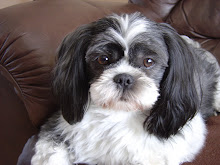
Dog Breeds: Bichon Frise


The name, in French, means curly white lap dog. Other names for this hypoallergenic dog are Bichon a poil frise and Bichon Tenerife.

The Bichon Frise is a descendent of the Barbet or Water Spaniel and was originally called a Barbichon. This name was later shortened to Bichon. There are four categories of Bichon: the Bichon Tenerife, the Bichon Havanese, the Bichon Malteise and the Bichon Bolognaise. All originated in the Mediterranean area.

These happy, lively little dogs, which are friendly and outgoing, love being the centre of attention and becoming a member of their human family.

The dark, alert eyes are full of expression. The nose is black, soft and shiny. The white, soft, corkscrew hair, over a silky undercoat, needs daily grooming to remain in tip-top condition. A small amount of the coat around the ears, snout, paws and parts of the body (not more than 10 percent of the body in total area) may have a buff, apricot or cream hue.

Height is 9 to 12 inches (23-30 cm) and weight 7 to 20 pounds (3-10 Kg). Puppy's noses are pink, but gradually turn black as they grow older. They also have cream or pink markings under their white coat, but these markings should be dark by the time the dog reaches 18 months of age. The legs and head are in proportion to the size of the body. The tail and ears are not docked or cropped. These dogs are of medium to high intelligence.

Because they require a lot of brushing, clipping and bathing, dead hair and dander is constantly being removed. As a result, these dogs make good pets for people who usually have allergic reactions to other dogs. It must be remembered, however, that individual dogs may have more or less allergens than the breed average.

The Bichon Frise is sensitive, gentle mannered, affectionate and playful. It usually gets along well with children and other pets.

The average lifespan of the Bichon is 12 to 13 years, although individual dogs may live for a longer or shorter period. These dogs are prone to cancer, autoimmune haemolytic anaemia (AIHA), immune-mediated thrombocytopenia (ITP) and liver shunts.

My Mom and Dad had a Bichon Frise named “Brandy” when they lived in Regina. She was a sweet little puppy, happy and active. However, as she got a little older, she began to limp and often walked on three legs, refusing to put any weight on her left hind leg. A trip to the veterinarian revealed that she had hip dysplasia. As a courtesy to the breeder, Mom phoned her and let her know that one of the parents was passing a hip dysplasia problem on to some, or all, of the pups. The breeder said, “You bought her, so it's your problem now,” and slammed down the phone. Obviously this breeder was not a good one and was only in it to make money, not to ensure that her stock was of good quality.

“Brandy” was operated on and had the ball removed from the top of her left rear femur. It changed her whole personality. Even after she was completely healed and had undergone rehabilitation so she could use her leg again, she became quiet, sad, slow moving and sullen. When she was about 8 ½ years old, she showed signs of chewing problems, so Mom and Dad took her to the Veterinarian. She examined “Brandy” and advised that she had cancer of the mouth and jaw. When Mom asked how long she had, the veterinarian replied, “she will let you know.” Several months later, she stopped eating. A few days after that, she came up to Mom and laid her head in Mom's lap and whined and closed her eyes. It was time! Mom and Dad took her to the veterinarian where she was put to sleep.

Friends of the family have a Bichon, “Charlie,” who is very outgoing and friendly and much loved by his “Mom and Dad.” So, if you would like to have a friendly white dog that loves attention, you may want to consider a Bichon Frise as your next dog. Just remember, they need a lot of maintenance to keep them looking good.

Until next time,

Teia

Sunday, September 20, 2009

A Memorial Tribute to KOKO


Dad and I were sitting together in the plant/computer room of our house just a few days after the beginning of 2008. The holiday guests had all left and we were looking back over the holiday season. Dad mentioned that it hadn’t been the same without “Koko” and that maybe he should write a memorial tribute to him. We tossed some ideas back and forth, but nothing really came of it other than a few notes that were filed in the computer desk. The other day, when the technician came to try and fix the problem we were having with our Internet connection, we found those notes and decided that the time had come to complete that tribute. This posting is the result.

If you look at the picture accompanying this posting you will notice that it is an apricot Poodle; that was “KOKO.” He was born on November 10, 1992 and had to be euthanized on December 19, 2007. He was partially blind, nearly deaf and during the last few months of his life, he lost control of his bladder and was urinating all over the place. Frequently when mom and dad tried to get him to eat moistened dog food, he would take a few bites and then his bladder would let go and a big puddle would end up on the floor. He was embarrassed and ashamed of this and he would run away and wouldn’t finish his meal. In addition to all of this, he began to pace the floor in confusion, so mom and dad felt that it was time.

It is very difficult to euthanize a pet, but it is particularly hard when you have had your pet for a long time and it is only days away from Christmas when you should be celebrating, not having to put a long time friend down.

Mom and dad got Koko in January of 1992 as a companion for their Bichon Frise, “Brandy.” The breeder was an elderly lady who was hospitalized in early December. As a result, Koko had little interaction with humans as there was no one in the home. The breeder’s son went to the house twice a day to feed the dogs and let them out to go to the bathroom. This created two problems. The dogs were not socialized and the larger dogs got most of the food and the rest fought over the leftovers.

For the first few months Koko would not let anyone touch him, but with a lot of patience and coaxing mom and dad eventually could touch him, but only with one hand. If anyone tried to touch him with two hands he would panic. He watched Brandy all the time and then mimicked whatever she did. If someone came to the door and Brandy jumped up and down and barked, then after watching what she did, Koko would do the same thing. It was interesting watching him learn what he should do.

One day when Koko was about six years old, mom and dad’s granddaughter came over with her new “Beauty Set.” All the adults were sitting having coffee in the kitchen and she was playing in the nearby family room. She then called everyone and asked them to come and see what she had done. Everybody went to look and there was Koko, the dog that you couldn’t put two hands on, sitting quietly beside her with hair curlers all over his head.

Koko was always afraid of going hungry, so whenever the food bowl was empty, he would drag it to wherever mom and dad happened to be in the house to show them that it was empty. The bowl was a ceramic food bowl and it weighed about one and one-half pounds, so dragging it around was quite a chore for a ten pound dog.

In 2001 the family moved from Regina, Saskatchewan to Creighton, Saskatchewan where we currently live. After the move, Koko would allow mom and dad to pet him with two hands or hold him and pet him. I think that the move probably made him feel insecure and as a result he wanted more contact with mom and dad.

At Creighton, Koko was introduced to walks in the bush. He thoroughly enjoyed these walks which usually involved our family’s dogs plus a neighbour and his three dogs. The bigger dogs frequently jumped into the ponds along our walking route and swam around. Koko would stand on the edge of the pond and watch the others, but he would not go into the water himself. Then one fall day a few years ago, the other dogs were in the water and Koko was standing on the bank of the pond watching when suddenly he made a massive leap and landed in the deep water about five feet from shore. He went right under the water and when he came back up coughing, he quickly swam to shore and climbed out. No one has any idea what made him jump in, but it was the one and only time mom and dad ever got him to go swimming. A couple of years later, in the spring when it was warm enough to take him out again, he was too stiff from arthritis to go on long walks, so mom and dad left him home when we went. It wasn’t the same without him, so mom and dad stopped taking all of us for walks in the bush.

As Koko got older, he enjoyed curling up beside mom on the loveseat while she watched television and he would curl up beside her in bed at night. Mom and dad miss his welcome bark when they come home from up town and his wagging tail letting them know he was happy to see them.

Mom, dad, and their younger daughter were all present when the veterinarian gave Koko his needle. Moments later the vet checked his heart with a stethoscope and pronounced him dead. Everyone said their goodbyes and mom left the room. Dad and his daughter were still in the room talking to the vet when dad noticed that Koko’s tail was wagging. The vet saw dad staring at the wagging tail and said that it was just muscle spasms. It might have been, but dad is sure that it was Koko’s spirit letting everyone know that everything was alright. I’m sure from his wagging tail that he has gone to a great place, but we all miss him.

Until next time,

Teia

PS from Dad. I’m glad that Teia pushed me into helping her with this memorial tribute. Koko went from a dog with a lot of social problems to a loving and faithful companion to all members of the family. We still miss him and his joyful welcome home greetings, but we know that he is no longer in pain and that he is in a place where he is happy. His wagging tail told me so!

Wednesday, August 26, 2009

Drying the Dog


There are various pieces of drying equipment available for both the professional and the non professional groomer to use. The most common dryer for professionals is the free standing hot air blowing dryer. This dryer can also be used by non professionals, but it is rather expensive for home use. Regardless of the type of dryer that you choose, from professional free standing dryers to inexpensive hand held ones, the following techniques apply.

Method of drying medium to long coated breeds.

Having towel dried the dog or used a blaster (if the dog will allow it), place the dog on a non-slip surface, preferably attached via a leash (lead) to a hook in the wall or a frame over the table. In this way, the dog will feel secure when the dryer is directed at him. If the dog is used to being dried, you may start on the head so that the dog warms up quickly, however if the dog is a little timid or fidgety it is best to start from the back and work toward the front, allowing him to become accustomed to it. Pick up the hair using a slicker brush and direct the hot air onto this, not onto the dog's body as it could be too hot. The slicker brush entangles and twists the hair, which allows the roots to dry as well as the hair on the brush. Continue this process until all the hair is dry. Make sure that you are systematic - only move on when the section you are working on is totally dry. Most of today’s dryers have two settings, a high setting and a low setting. Many dogs need the weaker (therefore quieter) of the settings directed at them when working on their heads. Some timid dogs will require the low setting for the entire drying process.

Fluff Drying Poodles, Bichon Frises and Bedlington Terriers.

Having mastered the basic techniques of drying you can move on to fluff drying the curly coats. Unlike the other breeds, do not attempt to completely dry the curly coated dog’s hair before starting to fluff dry. The secret is to towel dry one side more than the other. Start to fluff dry on the side that is driest. The wetter side will begin to dry naturally, but it should only get as dry as the side you towel dried by the time you are ready to fluff dry it. It is important to dry the head first on these breeds so that no hint of a curl is seen. You want the head perfectly dried so that it is ready for shaping. The pom on the poodles should then be dried followed by the legs and body. The slicker brush should be in constant motion throughout, flicking the hair in all four directions. The quicker the flick the better the result! Remember that you are not brushing to remove knots, as these should have been removed before bathing. Therefore to properly fluff dry, pressure is not necessary. It's the correct flicking technique that is vital. Do not move on until the section you are working on is thoroughly dry. Damp curly hair will result in kinks and waves, a coat on which it is impossible to achieve a desirable finish when scissoring. Remember when using the slicker brush to take care around the facial area, the hocks and the belly as these areas are tender and can easily be scratched. If this occurs, not only will the dog bleed, but it will also make it much more difficult to groom it in the future. Bathing, drying and grooming your dog should be a fun and bonding experience for both of you. (If you are a professional, frequent scratching of your customer’s dog will result in loss of that customer.) Take it from me, a good bath, drying, a nice brushing and a hair cut are great, however, a brushing that results in scratches could earn you an introduction to my teeth.

Until next time,

Teia