Showing posts with label ear infections. Show all posts

Friday, April 17, 2009

Ear Infections in Dogs


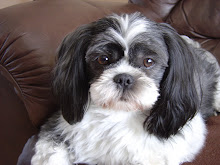
Yes it's a picture of me, and yes, it's bigger than all the other blog pictures. But hey, what's the point of having your own blog if you can't use it to show how pretty you are?

Ear infections are something that I am familiar with as I have a lot of problems with my ears. Because mom and dad check them regularly, I don't have near as many infections as I used to have, thank goodness. They're pretty painful and they make you feel yucky.

Dog ear infections are also commonly called Otitis Externa. It is an infection of the outer ear canal. There are three parts to the ear, the outer, the middle, and the inner ear. Ninety percent of infections occur in the outer ear, the part of the ear that you can see.

Dogs are prone to ear infections because of the anatomy of their ears. They have a horizontal and a vertical component to them, so it is hard for anything in there to drain out, like water, ear wax or bits of debris.

Signs of an ear infection include excessive head shaking, whining and scratching at the ear(s), yellow to dark brown exudate in the ears, or a yeast like smell. Additional signs of ear infections include redness and swelling.

There are several causes of ear infections. The most common causes of ear infections are allergies. Some dogs are more prone to allergies than others. Therefore, they get more ear infections.

Another common cause is sporting dogs that swim. Also included here is over enthusiastic baths. In each of these cases, the dogs get water inside their ears and because of their anatomy, the water in the ears cannot drain out. This provides the perfect environment for bacteria and yeast to grow. It is recommenced that if you let your dog play in the water, you dry your dog's ears thoroughly afterward. Similarly, after a bath, you should check the inside of your dog's ears for moisture. If you detect any, thoroughly dry the inside of the ear.

If your dog does have an ear infection, it is important to properly clean your dog's ears before applying any medication.

To clean your dog's ears, start by placing a few drops of an ear cleanser, available at veterinarian's offices and most pet stores, into the ear and massage the ear to help loosen any debris that is in there. Then use a cloth, cotton swab, or cotton gauze to wipe the dirt out. (Use of Q-tips is not recommended as you could pack the wax or debris more tightly into the ear with them)

After your dog's ears are thoroughly clean, then you can apply your medication. Follow your veterinarian's advice about how much medication to apply to the ear, usually one or more drops.

The treatment your veterinarian will prescribe will vary depending on the cause of the ear infection. For yeast infections they prescribe an antifungal medication and for bacterial infections they will prescribe an antibiotic. Normally treatment is applied directly into the ears, but in severe cases systemic treatment may be needed. This usually means you have to give your dog pills orally.

In some dogs with severe ear problems, the veterinarian will usually clip the hair around the ear to help let more air into the ear. In extreme cases your veterinarian may recommend surgery to reconstruct the ear canal to let it drain more easily.

Dogs that are prone to ear infections include all breeds with large ears that flop over the ear canal and breeds of dogs that have a very small ear canal. By knowing what to look for, you can detect ear infections early when treatment is easier, less painful for your dog and less expensive for you.

Until next time,

Teia

Wednesday, March 25, 2009

Bathing Your Dog


There is controversy regarding bathing your dog when you are going to clip it. Some groomers claim that you should bath the dog first and then groom it. Others say that you should cut the dog’s hair first and then bath it.


Sometimes I get a bath and then get my hair cut and other times I get my hair cut and then I get my bath. It all depends on the groomer. If my hair is cut before my bath, the clippers and scissors are dulled more than if I get my bath first. However, by cutting my hair first, the bath and drying time are shortened.


Both clipping and bathing cause me stress, so from that point it doesn’t seem to matter which is done first. However, my recommendation is to bath me first and then cut my hair. It is easier on the clippers and scissors and if my hair is left a little damp (damp not wet), it saves some drying time and the groomer has an easier time cutting my hair which makes it more comfortable for me.


Essential equipment for bath time is of course a high quality dog shampoo. Do not use people shampoo on your dog. Dog skin has a different ph than human skin. If you use people shampoo on your dog you will damage its skin and you may cause it to develop skin allergies. Dog shampoo is formulated with a ph compatible to a dog’s skin. I recommend that you put a rubber mat in your bathtub, hook a shower spray to your bathtub faucet (if you don’t have a shower in your tub) and wash your dog in the bathtub. Also put a fine strainer in the bathtub drain to catch the dog hair so you don’t plug up the bathtub drain pipe.


Never leave your dog unattended on a grooming table or in the bathtub.


Wet the dog thoroughly before applying shampoo. Lift long hair to be certain you get down to the roots. Be sure the water drains away as it runs off your dog. You do not want your dog standing in dirty water. If water starts to accumulate, turn off the spray attachment and clean the dog hair out of the strainer in the bathtub drain. Temperature of the water should be warm, never hot or cold. Put some cotton in your dog's ears to prevent water getting into them. Water in the ears from bathing can cause ear infections.


Start with the head and wet down the neck, along the back and down the left side including the legs. Repeat on the right side. You may want to avoid turning the dog at this stage. Turning the dog at this stage could encourage it to jump out. Wet the tail last.


If the dog is sensitive about having its head wet, you can take your free hand and place it over the dogs eyes before you start to spray the dog’s head. Or if that doesn’t work or is too awkward start with the tail and work up the body, wetting the head last.


After the dog is soaked, you can use a hound glove to remove dead hair from your dog’s coat. After doing this, clean any accumulated hair out of the bathtub so that it doesn’t clog the drain.
Soak the dog again to be sure that it is wet down to the skin and then work the shampoo into the coat thoroughly. Do not overlook the area underneath the chest and stomach, the anal area and the dog's feet (especially on the bottom of the feet). Be sure the shampoo gets down to the skin and is well lathered. Add water if needed.


Always use a tearless shampoo for the head and face. You still need to be careful not to get shampoo in the dog's eyes. Rinse immediately if the shampoo gets into the dog's eyes. Do not put shampoo in the dog's ears.


Rinse off the shampoo and use a second application if required. If your dog's coat is clean - it will "squeak" like human hair does. Clean your dog's coat until you hear the "squeak." Rinsing should be very thorough. Any shampoo left in the coat can cause intense itching and it will dry out the dog’s skin. If your dog has very sensitive skin, use a dog shampoo for dogs with sensitive skin. If you notice itching right after your dog's bath, discontinue the brand of shampoo that you used and try another brand next time. You should always use a dog hair conditioner after the shampoo has been rinsed out because it makes the hair more manageable and it seems to shorten the drying time and the brushing time. Always thoroughly wash the conditioner out of your dog’s hair before removing the dog from the bath.


If you would like to prevent yeast and fungus ear infections you can use Betadine Scrub (you can get this from your vet) inside the ears each time you bath your dog. Just pour a little straight from the bottle into each ear after the bath. Let it sit in the ear for a couple of minutes and then take a clean dry cloth and wipe any moisture and debris out of the ear. Keep the hair pulled out of your dog's ears so that ear wax and dirt don’t accumulate in them. (I don’t like this much as I have sensitive ears, but I’m also prone to ear infections, so my ears have to be kept clean).


When you are finished rinsing your dog's coat, squeeze out the excess moisture with cotton towels or super absorbent towels to cut down on drying time.


Most breeds of dogs need to be blow dried after a bath. Use a low temperature on your hair dryer. Be careful not to have the air blow directly onto the skin. Blow the hair away from the skin, but do not blow the skin itself. Most dogs hate the blower on their faces. If your dog objects to the hair blower then turn the blower down to low speed and the dog may not object as much.

Do not wash your dog more than once every two weeks as you will cause it to develop skin problems that could become difficult to treat. Most dogs only need a bath once a month. If you are in doubt, check with your veterinarian.

Until next time,

Teia