Showing posts with label sit command. Show all posts

Tuesday, June 9, 2009

Training Your Dog to Sit


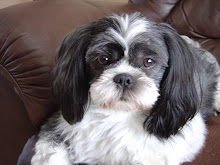
Mom and dad were talking to a neigbour the other day and she asked them how to train her new puppy to sit. Dad told me about it and I thought that it would be a good article to do for the blog since training your dog to "sit" is probably the first thing you will train your puppy to do. In fact it was the first thing I learned and mom and dad started teaching me as soon as I got settled in my new home. You might think that training a dog to sit isn't that important because they do it all on their own quite frequently. However, learning to sit on command is very important. Read on and you will find out why it is important and how to train your dog to do it.

1. This first step in this training program is easy. You just start by saying "sit" every time the puppy sits itself. He learns to associate the word sit with the action. This is a tip you can use in all training.

2. Take out a treat, his favorite treat if you know what it is and keep it in your hand. Anything that is tasty and won’t make a mess in your pocket usually works well but remember to cut it in small pieces so the puppy can swallow it fast. Mom and dad found that “Chicken Tenders,” dehydrated chicken breast, cut into little pieces was a great puppy treat for all occasions. It's healthy for me and I really enjoy it.

3. Sit down on the floor so you get to nearly the same level as your puppy. You are less threatening when you sit. More important is that you are closer to him so you can reward him more quickly. More about that in a moment.

4. Slowly move the treat over your puppy's head. The intention is to get the puppy to smell the treat (he will) and follow it with his nose. He has two options. Either back up while standing or sit down. It's easier to sit down.

5. Immediately as he sits you say "sit" and give him the piece of treat. This is the key factor to all training. The reward has to be given to him in exactly the same moment as the dog does the right thing.

6. Praise the dog. Show your happiness with your voice as well as your body language.

7. Repeat these steps 3-5 times and then take a break. You want this training to be fun for your puppy and if you keep doing it over and over for a long period of time, the puppy will get tired, lose interest and rebel against the training. However, you can repeat the steps several times during the day, as long as you only do it 3 to 5 times and then take a lengthy break.

8. Once your puppy does this repeatedly, you can try to see if the dog reacts only to the word "sit" without your hand and the treat. If he sits down you obviously should praise him and give him a treat. Once he does this repeatedly, see if he will continue doing it with only the praise, but without the treat. If he doesn't, don't show disappointment. Just go back a step or two in the training and start over. You should never show your disappointment to your dog when you are training. Once your puppy will sit on command, stand up and try it again. Once he responds to the sit command with you standing you can go onto the next step.

Now you can try to make him sit down beside you. This is actually a preparation for the heel training. There you want him to sit as soon as you stop walking.

The next level is to strengthen the word so you get the dog to sit in every situation no matter what's going on around him. This is an ongoing process and you should never stop training. Use every new situation to train him. Make him sit with new people, new dogs and new surroundings.

It's quite easy to train your dog to sit. If you consider not training your dog, my advice is think again. When you start training with your new puppy you get much more than the sitting part. The puppy loves to do things with you. He learns to listen to his name. He gets used to training and doing things with you and on your initiative. This strengthens your position as the leader and the puppy feels secure. When the puppy falls asleep in the evening his last thoughts should be: "This is a really great pack!"

Until next time,

Teia

Tuesday, June 2, 2009

The Rewards of Training Your Dog


A well trained dog is a joy to be around. Beyond being well socialized, trained dogs are less likely to jump up on people and are less likely to bite someone. They also tend to stay calm in distracting situations.

Also, well trained dogs are more likely to stay with the same owner as opposed to being abandoned to the pound. One research report from the Journal of the American Veterinary Medical Association found that 96% of shelter dogs had never had training of any kind.

Training your dog helps to teach him what he can and cannot do, making him more comfortable around you, your family and strangers. There are many different dog training programs and many professional dog trainers. However, just because someone has a business card stating that they are a professional dog trainer doesn't mean that they are a qualified trainer. Just like many professions now-a-days, there are many charlatans out to make a quick buck from unsuspecting dog owners.

To find a good trainer, start by asking everyone you know if they can recommend a good trainer. Check with your veterinarian and the breeder or supplier of your dog. Also, while walking your dog at the dog park, ask other dog owners whom they recommend. There have been dozens of different training methods for dogs that have been in and out of fashion over the years, so once you have found a trainer, ask him or her what method of training they use. Ask why they use it and what the benefits of it are. Also ask for references.

Whether you train your dog yourself or find a professional, teaching your dog commands and socializing it is very important. Areas to cover in training include:

1.Socializing your dog to strangers: This is easy to accomplish while out walking your dog around the neighbourhood and introducing her to people you meet. Until you get her to respond calmly and in a friendly manner, it is best to keep her on a short leash when meeting new people.

2.Socializing with other dogs: You can do this at dog parks, or even better, in a dog training class. Again, until you see how your dog interacts with other dogs, keep her on a short leash. The last thing you want to create is a dog fight.

3.Leash walking at a steady pace: You can start this training as soon as you get your new dog. If he starts to strain against the leash in an attempt to go more quickly, stop walking until he settles down. The first few walks could be quite short (in distance) because of the amount of time you spend standing still while he strains against the leash.

4.Crate training: This is important, especially to build up your dog's ability to calmly stay in a kennel environment for several hours at a time. If you have to leave him home alone and he is not fully trained, it is best that he be left in a crate to prevent him from getting into something he shouldn't, or causing damage.

5.The sit command: This is usually the first command new owneers teach their dog. It is good as a way of keeping her from straining against her leash or from lungeing at other dogs.

6.The stay command: This command is important for your dog to master, especially in an environment with a lot of distractions.

7.The down/stand command: These commands help to develop boundaries for your dog.

There are many other commands and behaviours that your dog should be taught as time goes on, but the above are some of the first that should be considered.

There are many benefits to having a well trained dog. But it doesn't necessarily mean that your dog will not develop behavioural problems down the road, such as separation anxiety, food guarding and other undesirable habits, however, these are not related to training or lack thereof. Simply put, a well trained dog is a joy to be around and the training strengthens the human-animal bond.

Until next time,

Teia