Showing posts with label groomer. Show all posts

Tuesday, December 29, 2009

Six Tips for Finding a Good Pet Sitter


A good pet sitter can help make your life easier, especially if you are away from home frequently. Pet sitters can not only take care of your beloved pets while you're on vacation or a business trip, but they can make your house look lived in by turning lights on or off, opening and closing the drapes and bringing in the mail and newspaper. Even if you're not on a trip, a pet sitter can come at noon to walk an over-active dog, administer medications, or give potty breaks.

The first person to consider as a sitter for your pets is a family member that lives nearby. They will be familiar with your pets and your pets will be familiar with them. If you do not have a family member living within reasonable driving distance, or a trusted neighbour who will look after your pets, then you will have to consider hiring a professional pet sitter.

If you've never employed a pet sitter before, or you've had trouble locating one, here are some tips that will help you.

1. Word of mouth is always a great way to find a pet sitter. Ask around. If your neighbour, friend, or co-worker has a pet, check to see if they use a pet sitter. If they do and they are satisfied with the sitter, then give the sitter a call and arrange for an interview.

2. Go to the professionals. Call your veterinarian or groomer and ask them for recommendations. They may know which pet sitters are good through conversations with clients, or they may have personal experience with pet sitters themselves.

3. Real estate agents are a wealth of information about anything going on in the community. If they don't have suggestions for you, they can at least point you in the right direction for finding the information.

4. Go online and search for a pet sitter in your area. Many pet sitters have websites these days and this can be a good way to locate them. Look at their websites carefully and make sure they service your area. They're likely to turn you down if you live outside their territory due to high gas prices. In addition, read over any testimonials they may have from clients and when you call them, ask for references.

5. Sometimes, you'll find that the good pet sitters are already booked. Ask them to recommend other pet sitters that they would trust with their own pets. Most of them will know other pet sitters and can steer you clear of any that don't have stellar reputations.

6. A number of stores have bulletin boards, particularly grocery stores. Check bulletin boards for advertisements posted by pet sitters and record their names and phone numbers so you can set up appointments to interview them. Note! DO NOT post a request for a pet sitter to contact you. You are alerting the criminal element that you will be away from your home, which could lead to someone stealing all your valuables and possibly harming your pet(s) or letting them out of the house to fend for themselves.

A good pet sitter can be hard to find if you don't know where to look. Using these tips should help you locate one, which will make both you and your pets happy. It will be a big relief to know that you have one less thing to worry about when you're planning your next trip.

Until next time,

Teia

PS. Please refer to “Ten Steps to Finding the Perfect Sitter for Your Pet” posted March 24, 2009. This post will give you further suggestions and also tell you about the problem mom and dad had with the sitter they hired. It may help you avoid a similar disaster.

Friday, August 7, 2009

Grooming Your Pet Cat


Regular grooming of your cat is vital to keeping it healthy, especially if your cat has long hair. Think of the cat's coat as the fur and skin together: You cannot have a healthy coat unless both the skin and fur are healthy.

It is the nature of most cats to maintain well-groomed coats. If you examine your cat's tongue, you will see little bristles on it that face toward the back of the tongue. Cats use these bristles to groom themselves, often for hours at a time.

Most cats do their own grooming, but they need your help to do a complete job. For example, your cat's tongue cannot reach behind her ears or on top of her head or back. Also, the bristles on her tongue cannot always get through matted hair. That's where you come in.

Grooming a cat, whether it has long or short hair, requires both work and patience. These guidelines will aid an amateur groomer. However, there may be times, even when following these guidelines, when you will not be able to do it yourself and will need professional assistance. This is especially true if you have a long-haired cat that mats badly, or a cat that becomes violent during grooming.

Most cats do not like water and if bathing is necessary you may require assistance from a professional who knows the special handling needed to bathe an objecting cat. Some cats object so strenuously to bathing that you will need to get them sedated. If that's the case with your pet, do not let your groomer do it, let only veterinarians give your pet sedatives of any kind.

When you get a kitten, it should not need to be groomed until it is at least 14 to 16 weeks of age.

When brushing your cat or kitten, always brush with the hair. If you brush against the lay of the hair, you could scratch your cat’s skin. In addition, most cats do not like to have their hair pushed backward. Since you want grooming your cat to be enjoyable for both of you, start at the head and work toward the tip of the tail. On the sides of your cat, start at the back bone and brush toward the stomach. Most cats are ticklish, so be very gentle when grooming your cat’s tummy. If your cat has mats in its hair, use a dematting comb. These combs are available from most pet supply stores. Unless you are well versed in cutting cats’ hair, I suggest that you leave getting your cat’s hair cut to a professional groomer. My mom and dad have owned a number of cats over the years and they never found it necessary to have the hair cut on any of these cats. Brushing is another matter. As long as you are gentle, most cats enjoy being brushed.

Several different types of brushes are available for pets. Some of them are slicker types with wire bristles. Others are pin brushes with thicker metal bristles with rounded tips. Others have bristles with little plastic balls on the ends and still others have bristles just like your own hair brush. Pin brushes are better than slicker brushes because they are gentler on the skin and do not scratch or hurt. All are relatively inexpensive, so use the one that does the best job with the least amount of fuss from your cat. I cannot recommend any specific type of brush, because like dogs, each cat will feel comfortable with a different style of brush depending on their particular coat.

The finale of a thorough grooming is trimming your cat's nails. There is a special nail clipper designed for cat nails. Dog nail clippers are too cumbersome and splinter cats' nails. So, when buying nail clippers, you may want to get a recommendation from your vet. Mom and dad got the nail clippers for their cats from a veterinarian and they were very effective.

Mom and dad found that an overall brushing once a week was sufficient for most of their cats. They had one cat that created a grooming problem. This cat was a little strange. He would walk along the picket fence to avoid getting his feet wet, but whenever he saw the neighbour’s daughter he would jump into the nearest puddle and lie there feebly meowing. She would rush over and pick him up and cuddle him, getting covered in mud, much to her mother’s annoyance. She would pack the cat home and he would lay in her arms with a sappy look on his face and purr like mad. I think he had a crush on her. Fortunately, he enjoyed a bath when he got muddy, so this made cleaning him up a little easier to do.

Until next time,

Teia

Wednesday, July 1, 2009

Tips, Techniques and Equipment for Brushing Your Dog


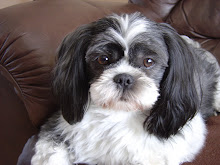
Just back from the groomer.

It is vital that your dog is brushed regularly for several reasons:

1. To avoid discomfort – matted hair is uncomfortable and leads to “hot spots” - areas where air cannot get to the skin and thus skin irritation and infection frequently set in.

2. To help eliminate skin disorders (see above).

3. To prevent an infestation of parasites. If parasites get onto your dog, you will usually see evidence of them when brushing the dog. The earlier you detect the parasites the quicker you can eliminate them.

4. To stop smells from developing. Debris, dirt, bits of food and matted hair, all of which smell, are removed during a thorough brushing.

5. To avoid extra charges at the Veterinarian and the Groomer. Many veterinarians and groomers charge extra when working on dogs with dirty matted hair. Mom and dad's older daughter took her two Cocker Spaniels to a groomer for a haircut and when she went to pay the bill she was shocked to find that the cost was $300 per dog because the groomer had to remove some matted hair from each dog. Needless to say, she no longer uses that groomer. However, most groomers have a $25 to $50 surcharge for dealing with dogs that have matted hair.

6. To remove loose hair, reducing the amount floating around the house.

To ensure that your dog's coat is in tip-top condition and to maintain a healthy pet, it is essential that the ears, eyes, coat, skin and anal area of the dog are checked regularly.

The first steps to brushing the dog:

1. Ensure you have a steady and non-slip work top or table. A rubber bath mat placed on a firm table will do. Do not use a towel as this will slip and slide. Having a firm surface that the dog feels comfortable on will prevent accidents and it will alleviate some of the stress of a thorough brushing.

2. Make sure that the dog knows that this is the place where misbehaving is not allowed. Start if possible as a puppy with regular short sessions. The more comfortable the dog feels on the brushing (grooming) table, the less problems you will have.

3. Make this an enjoyable and pleasurable experience (for both of you) but not a game.

4. The dog must learn through repetition, correction and praise. Do not smack the dog, use voice control.

5.Always reward the dog after brushing, either by treat or physical attention.

6. Take the dog outside to relieve itself before you begin the brushing session and again after you have completed the brushing.

The recommended frequency of brushing your dog's coat varies according to coat texture and length. Seek the advice of an experienced breeder or groomer. As a guide, every dog should be brushed at least once a week, although there are many breeds that need brushing three times a week! Unfortunately, some long haired dogs need to be brushed daily.

Does and Don'ts when brushing ALL types of coats:

1.Do not bathe the dog before thoroughly brushing out, as this tightens any knots present, also shampoo will be difficult to rinse out. Always remember that to prevent dry skin and to keep the natural oils in the dog's hair, restrict the number of baths you give your dog. My groomer recommends a bath only before getting my hair cut unless I get in the mud and get real dirty, then an extra bath can be given. Also remember that dogs require dog shampoo and conditioner as it has the proper PH for dog hair.

2.Do start brushing from the back and work toward the front as this is less sensitive for the skin.

3.Do be systematic, so that you do not miss any areas.

4.Do always hold limbs at a natural angle, no matter how awkward a position the knot or mat may be in.

5.Do remember that with most breeds there is the undercoat to brush too, not just the surface of the coat.

6.Do be firm, but do not smack your dog. Praise once corrected and obeyed.

Techniques of Brushing:

With long-haired dogs, or dense and curly non-shedding haired dogs, be aware that by brushing just on the surface of the coat you will not prevent matting. There is hair all the way down to the skin that needs attention.

Begin at the bottom of the back leg and, using your non brushing hand, lift the hair up and slicker brush underneath, bit by bit, gradually brushing hair down from where you are holding it.

Remember that there are four sides to a leg, front, back, outside and inside. Having worked your way up the leg, start on the belly and use the same method on the body. Always check with a comb, after thoroughly brushing, to check for hidden knots or undetected matted hair.

Take care when brushing near the eyes. The pins of the brush can scratch the eyes and cause permanent damage, sometimes loss of sight. The hock and the belly are also sensitive areas when brushing. Special attention should be given to the zones that tend to mat - underarms, inside legs, behind ears, feathering on thick coated dogs and the ear hair of floppy eared, long-haired dogs.

Basic Tools for Grooming:

Smooth-haired dogs will require a rubber brush to brush against the lie of the coat to loosen hairs. A bristle brush to remove dead skin and surface dirt and also stimulate circulation. A chamois cloth should be used to polish the coat for added sheen. Be gentle, you are not polishing your car!

Short coated dogs will require a slicker brush and a bristle brush. Also use a slicker brush and a bristle brush on long silky coats, which will additionally require a comb to test for remaining knots and matted areas.

Curly, non-shedding coats will require a pin brush and comb.

Until next time,

Teia

PS. My mom and dad brush me and give me emergency baths, but I get my hair cut and my regular bath from a professional groomer. You may want to consider this arrangement too, especially if you have reasonably priced professional groomers in your area. Giving a dog a nice looking hair cut requires a lot of practice. A good quality dog clipper is quite expensive. The clipper blades need to be professionally sharpened on a regular basis and will probably have to be replaced a couple of times during your dog's lifetime.

Saturday, June 6, 2009

Anal Sac Problems in Dogs


The Apricot Poodle in the picture with me is Koko, who passed away on December 19, 2007. He had anal sac problems most of his life. Dad learned how to express the anal sacs and he did it for Koko on a regular basis. When he did this, Koko's problems disappeared. It is quite smelly when expressing these glands, but not very difficult to do after you learn how to do it. Dad learned how from the family veterinarian.

It is a common misconception that a dog needs worming when he is seen to be biting his rear end, or scooting past on his bum the moment you have friends over for coffee. The probable cause for this discomfort (and embarrassment on your part) is that the dog needs his anal glands expressed.

Dogs have two pea-sized anal sacs situated on either side of the anus, approximately at the five and seven o'clock positions. These sacs contain a very strong smelling liquid, which is usually secreted when the dog has a bowel movement. The feces, when passing through the anus, pushes against the anal sacs squeezing a little liquid out. This liquid is thought to be a dog's “calling card”. This is why most dogs tend to say “hello” to each other by sniffing each other’s rear-ends. Sometimes, however, the bowel movement can be too soft to push against the sacs and a build-up of liquid occurs. The anal sacs can become over full and cause discomfort. Alternatively, the sacs can become blocked and impossible to empty. If these problems are ignored, they do not go away. Abscesses can form, infections can set in and self-inflicted wounds occur due to severe biting. Hair loss, coat discoloration and enormous discomfort and pain for the dog also occur.

Sometimes, all that is needed is a slight increase in dietary fiber to harden the stool. However, there are other factors that may contribute to the problem. The consistency of the liquid produced by the glands may make it difficult to pass, or the actual conformation of the anus, or even obesity can prevent the sacs from emptying properly. Therefore, sometimes a helping hand is required!

Many groomers empty the dog's anal glands as a matter of form during the bathing process. However, it is now believed that unless requested by the owners, who have learned from the veterinarian that it is necessary, it is best to leave the anal glands untouched, for once the dog gets into a routine of having them emptied periodically, they will always need manual emptying. It is important to note the color and texture of the secretion to report to the owner so that they may seek veterinary attention if they feel it is necessary. Anal sac fluid that looks like black paste, or that contains pus or blood, is not normal. Soreness when touched and an inability to empty with ease is a sign of blockage. This should be mentioned to the owner. Any lumps around the anus should also be mentioned to the owner.

Usually, expressing the sacs externally is enough to relieve the discomfort. This should not cause any pain to the dog and it takes seconds to do. Excessive squeezing and prodding must be avoided as damage to the glands could occur. The vet may empty the sacs internally while examining the dog. This is NOT for the groomer or owner to do.

If the problems persist, the veterinarian may advise removal of the glands, as a last resort. They do not like undertaking this operation as the muscles around the anus can weaken and sometimes become permanently damaged. After the operation the dog usually feels great discomfort for a considerable length of time.

Until next time,

Teia