Showing posts with label euthanize. Show all posts

Sunday, September 20, 2009

A Memorial Tribute to KOKO


Dad and I were sitting together in the plant/computer room of our house just a few days after the beginning of 2008. The holiday guests had all left and we were looking back over the holiday season. Dad mentioned that it hadn’t been the same without “Koko” and that maybe he should write a memorial tribute to him. We tossed some ideas back and forth, but nothing really came of it other than a few notes that were filed in the computer desk. The other day, when the technician came to try and fix the problem we were having with our Internet connection, we found those notes and decided that the time had come to complete that tribute. This posting is the result.

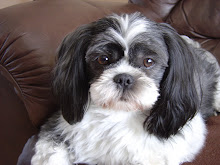
If you look at the picture accompanying this posting you will notice that it is an apricot Poodle; that was “KOKO.” He was born on November 10, 1992 and had to be euthanized on December 19, 2007. He was partially blind, nearly deaf and during the last few months of his life, he lost control of his bladder and was urinating all over the place. Frequently when mom and dad tried to get him to eat moistened dog food, he would take a few bites and then his bladder would let go and a big puddle would end up on the floor. He was embarrassed and ashamed of this and he would run away and wouldn’t finish his meal. In addition to all of this, he began to pace the floor in confusion, so mom and dad felt that it was time.

It is very difficult to euthanize a pet, but it is particularly hard when you have had your pet for a long time and it is only days away from Christmas when you should be celebrating, not having to put a long time friend down.

Mom and dad got Koko in January of 1992 as a companion for their Bichon Frise, “Brandy.” The breeder was an elderly lady who was hospitalized in early December. As a result, Koko had little interaction with humans as there was no one in the home. The breeder’s son went to the house twice a day to feed the dogs and let them out to go to the bathroom. This created two problems. The dogs were not socialized and the larger dogs got most of the food and the rest fought over the leftovers.

For the first few months Koko would not let anyone touch him, but with a lot of patience and coaxing mom and dad eventually could touch him, but only with one hand. If anyone tried to touch him with two hands he would panic. He watched Brandy all the time and then mimicked whatever she did. If someone came to the door and Brandy jumped up and down and barked, then after watching what she did, Koko would do the same thing. It was interesting watching him learn what he should do.

One day when Koko was about six years old, mom and dad’s granddaughter came over with her new “Beauty Set.” All the adults were sitting having coffee in the kitchen and she was playing in the nearby family room. She then called everyone and asked them to come and see what she had done. Everybody went to look and there was Koko, the dog that you couldn’t put two hands on, sitting quietly beside her with hair curlers all over his head.

Koko was always afraid of going hungry, so whenever the food bowl was empty, he would drag it to wherever mom and dad happened to be in the house to show them that it was empty. The bowl was a ceramic food bowl and it weighed about one and one-half pounds, so dragging it around was quite a chore for a ten pound dog.

In 2001 the family moved from Regina, Saskatchewan to Creighton, Saskatchewan where we currently live. After the move, Koko would allow mom and dad to pet him with two hands or hold him and pet him. I think that the move probably made him feel insecure and as a result he wanted more contact with mom and dad.

At Creighton, Koko was introduced to walks in the bush. He thoroughly enjoyed these walks which usually involved our family’s dogs plus a neighbour and his three dogs. The bigger dogs frequently jumped into the ponds along our walking route and swam around. Koko would stand on the edge of the pond and watch the others, but he would not go into the water himself. Then one fall day a few years ago, the other dogs were in the water and Koko was standing on the bank of the pond watching when suddenly he made a massive leap and landed in the deep water about five feet from shore. He went right under the water and when he came back up coughing, he quickly swam to shore and climbed out. No one has any idea what made him jump in, but it was the one and only time mom and dad ever got him to go swimming. A couple of years later, in the spring when it was warm enough to take him out again, he was too stiff from arthritis to go on long walks, so mom and dad left him home when we went. It wasn’t the same without him, so mom and dad stopped taking all of us for walks in the bush.

As Koko got older, he enjoyed curling up beside mom on the loveseat while she watched television and he would curl up beside her in bed at night. Mom and dad miss his welcome bark when they come home from up town and his wagging tail letting them know he was happy to see them.

Mom, dad, and their younger daughter were all present when the veterinarian gave Koko his needle. Moments later the vet checked his heart with a stethoscope and pronounced him dead. Everyone said their goodbyes and mom left the room. Dad and his daughter were still in the room talking to the vet when dad noticed that Koko’s tail was wagging. The vet saw dad staring at the wagging tail and said that it was just muscle spasms. It might have been, but dad is sure that it was Koko’s spirit letting everyone know that everything was alright. I’m sure from his wagging tail that he has gone to a great place, but we all miss him.

Until next time,

Teia

PS from Dad. I’m glad that Teia pushed me into helping her with this memorial tribute. Koko went from a dog with a lot of social problems to a loving and faithful companion to all members of the family. We still miss him and his joyful welcome home greetings, but we know that he is no longer in pain and that he is in a place where he is happy. His wagging tail told me so!

Friday, August 21, 2009

Vaccinating Your Pets


Timely vaccinations are a very important part of your pet's health. Different types of vaccines should be given at different times and locations. For example, if you live in an area where rabies is prevalent, then you should have your pet vaccinated for this disease. However, if you live in an area where rabies is rare, then it may not be necessary to get your pet vaccinated against this disease, or it may only need to be vaccinated every two or three years instead of every year. Currently there is a lot of controversy among veterinarians and among staff at veterinarian colleges regarding the frequency of vaccinations. These professionals are currently conducting tests to determine the optimal time frame for safe and effective vaccinations. When they have arrived at a major consensus, I will post a further entry on this topic.

Some people are against vaccination of their pets and some are in favour of it, but my assertion is that there are risks involved with both decisions. A firm statement cannot be made on this topic as the rules vary from one individual animal to another, depending on the needs and tolerance levels of the animal involved. There are, however, certain factors to be considered when you are making your decision. I will try and point out these factors in this post.

Young animals which have been separated from their mothers before they reach six weeks of age and who are bottle fed, are at higher risk of getting diseases. This is because these animals do not get enough maternal antibodies from their mothers milk, which protect them from contracting diseases, until their own immune system becomes fully developed. The development of an animal's immune system can differ on the basis of the mother's antibodies, the amount and type of viruses the young animal is exposed to, the potency of the viruses and the body's ability to withstand the virus attack. Diet and nutrition will also play an important role in the young animal's ability to ward off disease.

Animals which don't get their mother's antibodies and which aren't exposed to diseases, do not build the antibodies needed to ward of these diseases on their own. As a result, they need to be vaccinated against these diseases so that the vaccination causes their bodies to build the necessary antibodies needed to prevent them from contracting these diseases if they are exposed to them at a later time.

As mentioned above, numerous pet owners do not believe in vaccinating their pets. They feel that the risks associated with vaccinations outweigh the benefits from them. This is a personal decision, which has both good points and bad points associated with it. An unvaccinated animal exposed to a disease would have a poor chance of warding off that disease. On the other hand, if their animal is never vaccinated, then it will never have an adverse reaction to a vaccination.

Vaccines and vaccinations are being improved all the time, so fatal reactions to vaccinations are now becoming rare, but they do happen on occasion. One thing that needs to be covered more thoroughly by both the owner and the veterinarian is the history and genetics of the animal. When obtaining a pet, it is inherent on the new owner to determine the background of the animal, its parents and grandparents, if possible. By checking the animal's family background it can be determined if any family members suffered from any genetic diseases, or had adverse reactions to vaccinations. The veterinarian should also do a thorough physical examination of the animal including blood testing to ensure the animal is healthy. Sickly animals will have more likelihood of experiencing an adverse reaction to a vaccination than healthy animals. Also, by having the weight of the animal, the veterinarian can determine the exact amount of vaccine that should be given to the animal, reducing the likelihood of an adverse reaction and still ensuring that the animal is protected against that specific disease.

The environment where the animal is being kept also plays a major role in both diseases that they might get and their reaction to vaccinations. If the animal is kept in a sanitary and clean place, it is less likely to become ill. A dirty environment not only spreads viruses and bacteria, but also affects the immune system and the overall health of the animal(s) kept there.

Another important factor that should be considered when determining if your pet should be vaccinated and what it should be vaccinated for is your lifestyle. If you travel a lot and you want to take your pet with you, then you will find that many jurisdictions require numerous vaccinations for your pet. If you cannot present an up-to-date vaccination record for your pet, they will frequently confiscate the animal and put it into a quarantine facility. Your animal will be held for a long period of time, usually 30 to 45 days, at your expense, and it will probably be given a multitude of vaccinations. If, while there, it shows any sign of illness, it will be euthanized. You could also find yourself in court for transporting a contagious animal. To prevent this sort of thing from happening, make sure that you either have your animal vaccinated according to the requirements of the jurisdictions you will be travelling through, or leave your animal home and hire a pet sitter. You will also find that the majority of good quality pet boarding facilities will not accept your pet unless it has an up-to-date vaccination record. They cannot take the chance that your pet may pass on a disease to the other animals in their care.

Mom and dad have owned numerous pets of all kinds over the years. Any pet that went outside their home was vaccinated with all the vaccines recommended by the veterinarian for the area where they lived at that time. None of their pets ever had a reaction to a vaccination and none of them ever caught a disease for which a vaccine was available.

To vaccinate or not to vaccinate, the choice is yours. However, please bear in mind what I have outlined above. Personally, my choice is to vaccinate as it has worked very well for me.

Until next time,

Teia