Showing posts with label training. Show all posts

Saturday, June 13, 2009

Why You Should Train Your Golden Retriever to Stay


Most of the problems you will have with your Golden Retriever will be caused by a combination of his intelligence, energy and desire to please. It is important to train your Golden to stay because his excess energy can cause him to run off in an instant if he gets loose. It's not that he wants to escape, it's just that his desire to romp overcomes his desire to stay with you.

One of the first steps in training your Golden is to establish you as the "alpha dog" or "pack leader.” Because the Golden Retriever is a fairly large dog, having him properly trained is especially important as many people are afraid of large dogs and will shy away from an uncontrollable over exuberant dog. It doesn't matter that Goldens are not aggressive dogs. Good training will make your dog more welcome wherever you go.

Pay attention to your dog and make eye contact often. When your dog does something right, look him in the eye, give him verbal praise and offer a treat, in that order. For example, when your dog sits (whether by command or not), make eye contact, say "good sit" and give him a treat.

Goldens are very sensitive dogs. They do not do well with scolding or punishment. It's better to identify the good behavior and reward that, rather than use negativity.

Your dog can learn to stay from any position, lying down, sitting or standing. Eventually you will want to train him to stay from all of these positions.

With your dog on a leash, stand to his right, place your hand in front of his face, palm toward him and say "stay.” Step away from your dog with your right foot first as stepping with the left foot encourages the dog to move too. Take two steps, turn and face him.

Give him the hand signal again, hand right in front of his face with the fingers pointing up and repeat "stay.” Return to his side and say "ok." Then say "good stay" and give him a treat.

Over time, increase the length of time you hold up your hand and increase the distance you walk away from him. Eventually, walk the full length of the leash away, hold up your hand and repeat "stay.”

Always return to his side. Reward him if he continues to do as he is told.

Starting with “little baby steps” that you can reward with a "good stay" and a treat are much more valuable at first than trying unsuccessfully for a longer time or distance.

Are you worried about spoiling your dog with too many rewards? Are you concerned that he won't obey without them? As long as you never show the treat to your dog before he exhibits the desired behavior, you don't need to worry. A rule of thumb with Goldens, since they are so sensitive and so eager to please, is pick your battles and bribe shamelessly.

You can overdo training, so keep each session fairly short. If you can, repeat training sessions several times a day. Use reward-based training or, if you prefer, clicker-based training, rather than discipline training for your Golden. As previously mentioned Golden Retrievers do not respond well to discipline based training.

It is very important that your Golden Retriever learn the sit and stay commands thoroughly. A Golden Retriever is a fairly large dog and it is much better if they sit rather than jump up and try to lick the face of a child. Young children are easily knocked over by happy Goldens!

When you feel that your dog has learned to stay well, vary the circumstances. Make sure he can stay from a sitting, laying, or standing position. Practice inside and outside, around other dogs and other people. Try to distract him with a rolling ball or have someone else call him. You aren't being mean and you are not trying to trick him. You are simply helping him to understand better what you mean by "stay” and he will be deliriously happy when he knows he's got it right.

Here's a bonus tip specific to Golden Retrievers, but you be the judge if it's appropriate for your dog, retriever or not. Retrievers like carrying things in their mouths; many of them have favorite toys they don't like to be without. If your dog is having trouble concentrating during a training session, you can try letting him hold his favorite stuffed toy in his mouth. If he thinks it's playtime, it won't work, but often it calms him and gives him a focus. A friend, Rick, lets his Golden, “Emma,” carry one of his gloves. This keeps his smell close and makes her more responsive to his commands.

With these few tips and techniques under your belt, your training sessions with your sunny-tempered Golden can be quite fun and pleasurable for both of you.

Until next time,

Teia

Monday, June 8, 2009

Training Your Cat to Use the Toilet


Cats are wonderful pets, but cleaning the litter box can be a real drag. But what if you could train kitty to use the toilet? Instead of dealing with messy, smelly litter, you could get rid of your cat’s elimination with just one flush.

When training your cat to use the toilet, it's best if you have two toilets in the house. Using one just for the cat and one for yourself during the training period will make things much more convenient, although you can train your cat with only one toilet.

For toilet training your cat, you will need an aluminum tray that fits into the toilet and an aluminum tray as a replacement for his litter box. The idea is to get him used to the aluminum tray in the same spot his box is usually in and then the tray in the toilet won't seem so foreign.

Keep the litter box in its original spot but replace the box with the aluminum tray instead. Use the same litter and keep everything else the same. Once the cat is used to this new arrangement, start gradually switching the litter to flushable litter. Once the cat is used to the flushable litter, you are ready for the next step.

Gradually move the litter box closer to the toilet. Don't move it too far each time and make sure your cat knows where it is by taking her over to it and scratching her paws in it. If your cat stops using the box, you are probably going too fast for her, so slow down. Training a cat to use a litter box is a process that takes a long time, so patience is key.

Once the cat is using the litter box next to the toilet, raise it an inch off the floor. Make sure you use something that will keep the box stable and that the box will not slide off. Gradually, every third or fourth day, raise the box an inch higher, until it is level with the toilet. As it gets higher the cat will have to jump up into it, so it is critical that the box is stable, if it tips over this will scare your cat and she might not want to use it again.

At this point, you should have the tray ready in the toilet. You can use a cooking tray that is wide enough to fit the toilet. Put the tray in between that seat ring and the toilet base - make sure this holds it in place. Put some of the flushable litter the cat is used to in the tray.

Leave the litter box level with the tray in the toilet for a couple of weeks, gradually taking away the litter in the box. Eventually, the cat should just jump up and use the tray on the toilet. Once this is happening regularly, take the litter box away.

The next step is to gradually reduce the amount of litter that is in the tray on the toilet. Also, make a little hole in the tray. Each day, reduce the litter more and make the hole a bit bigger. Do not move too fast on this or your cat might not feel comfortable using it. Eventually, you can remove the tray altogether and your cat will be toilet trained!

Since your cat needs to balance on the toilet seat eventually, it is not recommended that you train cats that are too young. Wait until your cat is about six months old so that she is big enough to balance on the toilet seat. One important point that should be obvious, is that once your cat starts using the toilet - you MUST leave the toilet lid open at all times - the cat can't open it herself.

Be patient as this training process can take several months, but when your cat is trained you will have eliminated the smell and mess of a litter box. Now the only problem you will have is remembering to knock next time you want to use the bathroom as your cat may be using the toilet.

My mom and dad have never personally trained a cat to use the bathroom, but they have known people who have been successful at doing this. They also have a friend that trained her rabbits to use the toilet. If you decide to try training your cat to use the toilet, you may want to consider putting a child’s toilet seat into the regular seat before putting the tray on the toilet under the seat. The hole in a child’s seat is smaller than an adult toilet seat so there will be less chance of your cat falling into the toilet. Having a bigger landing area for the cat when it jumps up is also a benefit as the cat will feel safer.

Until next time,

Teia

Friday, May 29, 2009

Testing a Puppy's Personality


WHAT IS PUPPY TESTING?

Just like humans, every dog has its own personality. This can be determined, in dogs, at a young age. The object of a puppy test is to determine what kind of personality the dog has. Knowing this, allows you to train your dog more effectively.

Some people believe that a puppy test allows you to pick the perfect dog. This is nonsense. It does, however, allow you to pick a puppy which is mentally stable and has an easy-to-work-with personality. From experience, my mom and dad can say that dog training is 70% the owners experience and mentality and only 30% that of the dog. So, having a mentally stable and easy-to-work with puppy does not guarantee that you will have a dog that is easy to train or that will turn out to be a perfect dog. YOU, as the owner, will make a huge contribution to the type of dog you end up with.

CONDITIONS FOR A PUPPY TEST

It's important that the test is performed in a neutral room or space where the dog hasn't been before and where there is no external distraction for the dog.

The optimal age for the test to be performed is when the puppy is five to seven weeks old. At this point, the personality is nearly set, but the dog is not yet fully attached to humans.

The person performing the test should be someone the puppy has not met before. This is necessary so that some parts of the test do not give invalid results.

THE ACTUAL TEST

The test described below is the well-known Campbell test.
(See http://www.seefido.com/html/campbell_s_test.htm for scoring information)

This is not the only test that can be used as several others exist.

With this test, the puppy is scored on five criteria:

* Social attraction.

* Facility to follow.

* Reaction to orders.

* Social domination.

* Acceptance to being lifted.

For the “social attraction” test, the testing person sits a few feet from the puppy and observes how the dog reacts: Does it come? If it comes, is the tail carried high or low? Does he scout his surroundings? Does he run the other way?

When testing the “facility to follow,” the tester will put the puppy next to him and then walk away. Does the dog follow or not? Does she follow and jump up at the test person and even try to bite his ankles? Does she follow from a distance? Does she wander off on her own?

The “reaction to orders” test requires that the puppy be put on his back and held down on the ground by placing a hand flat on his chest. Does the puppy protest heavily, try to turn over and try to bite the hands of the testing person? Does he initially protest but calm down later? Does he remain quiet or does he try to lick the tester’s hands?

With the “social domination” test, the tester will sit down next to the puppy and just stroke him. Here he'll observe what the puppy does. Some puppies will try to crawl up on the test person, others will try to bite the hands of the test person and other puppies will lie on their back and lick the hands of the test person. Some puppies will even run away.

For the final test the puppy is lifted from the ground supported only at his chest (this way the puppy doesn't see the test person). Does he struggle and try to bite the hands of the tester? Does he initially struggle but calm down after a while? Does he remain calm and perhaps even try to lick the hands of the test person?

The combination of results lets you determine what personality the dog has. For novice dog owners it is best to pick a puppy that hasn't got an extreme test result, because puppies with extreme results are either very dominant or extremely submissive and will require a handler who is experienced.

Until next time,

Teia

Question - Do you think puppy testing is worthwhile? Leave your comments.

Wednesday, May 27, 2009

Teach Your Child to be Safe With a Puppy


It has been said that a dog is “man's best friend” and that a well trained dog can provide much love, fun and security. However, you must remember that a dog is an animal, one that can be dangerous and inflict serious injuries and even cause death. It is, therefore, vital that just as you would train a puppy at an early age, you must educate your children in the correct ways to deal with a canine. ALWAYS remember that when a child and dog are 'loose' together that they MUST BE under adult supervision.

Children must always understand that a dog, especially a puppy, is not a toy, a doll or teddy bear. Children love being cuddled and hugged, kissed and carried around, but they also know that at times they become grumpy and irritable when adults fuss over them too much. Well, a dog is exactly the same. They do not want to be disturbed when eating or resting or sleeping but they cannot say “go away' or cry. When they get grumpy, they may snap at the offender.

Adults must be aware that young children may unwittingly encourage puppies to chase them, often leading to play biting. The puppy sees the child as one of its own and in the excitement of play an injury can occur. So this is another reason why there should always be adult supervision. Older children and even adults can be guilty of over-stimulating an excitable puppy one minute and then telling it off for the same thing a minute later and even worse hitting it the next! Adults should avoid and definitely should not let children play aggressive rough games with any puppy. This may result in an aggressive dog or a dog with behavior problems later on. Likewise, taunting or making a puppy jealous can have serious implications in an adult dog. Remembering its puppy days, an adult dog can misjudge a situation and react in the wrong way.

Children should be encouraged to leave the puppy alone unless it comes to them for attention. If they want to play with the dog, they should call it by name and get it to come to them. Just as humans dislike close face-to-face interaction so do puppies. So, children must learn not to push their faces into the dog’s, because they could risk a painful nip. Children should also be encouraged to put their toys, clothes, shoes etc. out of the reach of a puppy. This prevents the puppy from claiming these items as its own. This solves two possible problems. One, a child trying to pull items away from a dog could get bitten and two, the possibility of the pup swallowing an item leading to a painful (for the dog and the adult’s purse) trip to a veterinarian.

The most important lesson, though, is to teach respect for a living animal. Children must understand the need to give a dog space, let them have quiet time and then when together to be quiet and gentle with one another. The same rules really apply with children interacting with one another. Living with a dog or dogs will enrich their lives as long as they learn to understand canine language. Caring for a dog encourages responsibility and develops empathy. There are so many positives in a child - dog relationship, providing a responsible adult has trained the dog and the child in the correct ways of living together.

Until next time,

Teia

Friday, May 15, 2009

How to Potty Train Your New Puppy


Many questions arise when you bring your new puppy home.

Such as . . .
How do you potty train your puppy?
What can you do about your puppy when you are at work?
Are there steps to follow when potty training your puppy?

Keep in mind that raising a new puppy is a lot like raising a child. It is a lot of work, they keep you up at night, they get into things and make messes, but your new baby (puppy) also gives you a lot of joy and love.

Potty training a puppy is not that hard.

Here are some proven steps to potty train your new puppy:

1) Purchase a play pen, portable dog pen or kennel.

2) Line part of the floor of the kennel, portable dog pen or play pen with newspaper or puppy pads. In the play pen and the portable dog pen there is room for newspaper/puppy pads on one side and bedding on the other. If you use a kennel, it is a little smaller and your puppy may have a few accidents at first. Generally, dogs do not go potty where they sleep, but when they are very young, they just cannot hold it for long.

NOTE: Using a play pen or portable dog pen is such a great way to potty train your puppy. They are also great for when you are unable to give your puppy undivided attention. You can place your puppy in them and it is a safe place for puppy to play and not get hurt or get into anything that he shouldn't.

3) Keep your puppy in the play pen, portable dog pen or kennel when not attended or when you are not at home.

4) Within 30 minutes of feeding your puppy make sure there are newspapers or puppy pads accessible for your puppy to go on.

5) If you catch your puppy in the act - place your puppy immediately on the newspaper or pads so they can finish there.

6) Do not hit your puppy. They do not respond to cruelty. Instead reward your puppy with treats whenever they go potty properly on the paper or pads.

7) As soon as your puppy has received its third set of shots you can begin putting your puppy outside to go potty. You can move the newspaper outside to help your puppy get used to going outside.

8)After a while (usually 4-6 months), your puppy will be trained to go outside on his or her own.

9) The end result will be that you will get a well trained, well-behaved puppy and you will be a happy owner too!

The first week of potty training your new puppy may be a little trying at times, but you have to remember this is a commitment to a life long friend and your new puppy is getting used to his or her new family.

You really want to be consistent in your training of your puppy. Your puppy will be more easily trained if you follow a routine -- otherwise you will confuse your puppy, cause your puppy to have more accidents and have a much harder time with potty training.

Putting time into your puppy at the beginning of its life will pay big dividends in good behavior later.

Until next time

Teia

Friday, April 3, 2009

When Should You Start Training a Puppy?


It is never too soon to start training a puppy. Other than teaching her about paper, piddle pad or outdoor bathroom behavior, you may want to give your puppy as much freedom as possible until she is about four to six months of age. That does not include letting her run amok in public places. Always keep a lead and collar on your puppy in public places where there is danger from road traffic, children or other dogs. In many countries it is against the law to allow a dog to run free, so be careful if that applies in your country.


Also be careful in off leash parks if there are older dogs loose as they may attack a rambunctious pup they think is infringing on their territory. A boisterous young pup of a larger breed can also harm young children or frail elderly people by jumping on them excitedly. Always keep your pup in sight when she's off her leash.


Plenty of exercise and fresh air are essential for a fast growing young puppy. She needs the exercise to strengthen her bones and fresh air for the development of strong lungs. Being in public places also allows her to interact with people and get used to the noises of traffic and life in general. She should be exercised daily if possible. A side benefit of this is that she will sleep well and not get bored, which is the main cause of bad habits and destructive behavior seen in so many young dogs today. Another thing it prevents is shyness, which is primarily caused by isolation as a pup, although shyness is also a trait that can be inherited.


Starting Basic Puppy Training


You can start training a puppy from about four to six months of age. It is possible to train older dogs, but it's a lot harder. Don’t overdo these exercises. Twenty to 30 minutes a day is adequate. You'll find that your puppy tires fairly quickly and a tired pup won't learn anything. Be regular in your training sessions, taking her out about the same time each day. Dress in the same shoes or jacket each training session and the pup will soon associate those shoes or that jacket with training.


Teaching a Puppy to Heel


Walk at a steady pace with your puppy on a lead attached to a firm fitting collar. Have her on your left side, occasionally saying the command HEEL. Each time you say HEEL, slap your thigh or the side of your leg. If your pup pulls away or gets distracted, just keep walking, she'll soon get the message and follow along. If you don't stop, she'll have to follow. As she follows you after a distraction, pat her saying GOOD DOG or GOOD GIRL. If she tries to run or pull against the lead, say a very firm HEEL! When she obeys, give her a pat and praise her and she'll soon get the message. In place of a pat you may want to try a small treat. Take it from me, the way to a dog’s heart is through its stomach. Praise and a small treat work wonders when training your puppy.


Teaching a Puppy to Sit


Once your puppy is heeling properly, it's time to teach her to sit. With her walking at your left side, stop, transfer the lead to your right hand and while pulling up on the collar, press down on her back end with your left hand. She will have no choice but to sit. While lifting with the collar takes weight off her front legs the motion causes the pup to want to sit, especially with your hand pressing her down. Firmly say the command SIT as you press down. Repeat this several times, praising her each time she sits. Now walk further along and repeat this exercise several more times during your walk.


Once puppy has learned these basic commands, register her for an obedience class. Check with your veterinarian to find out where they are held in your area. If the veterinarian does not know, check the yellow pages in your phone book or the pet section of the classified advertisements in your local paper.


Until next time,


Teia

Tuesday, March 24, 2009

Dog Breeds – The Chihuahua


The most likely origin of this breed of dog is that it is the progeny of the mating of the native Mexican Techichi and a minature Chinese dog such as the Chinese Crested dog. Over the years, it has been selectively bred to become the smallest dog breed in the world.

The remains of a progenitor of the breed was found in ancient ruins in the Mexican state of Chihuahua so this is the name that was given to this minature dog.

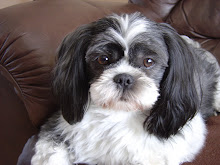
Believe it or not, I am one-eighth Chihuahua. The other seven-eighths is Shih Tzu. My half-sister, Jemma, is half Chihuahua and half Shih Tzu.

If you are considering whether or not to buy a Chihuahua, regardless of whether it is as a pet or as a show dog, there are four important things to consider.

Hype - Don't be drawn to the Chihuahua simply because it is so small. You may have heard of phrases like: teacup Chihuahua, pocket Chihuahua and miniature Chihuahua, among others. These phrases are sometimes used by breeders and pet shops as a marketing ploy to increase their sales. These phrases really do not apply to the Chihuahua as they do not exist in the breed standard. Therefore, implying that a Chihuahua pup is a teacup Chihuahua is simply a device to entice you to purchase the pup in the hope of getting a very small Chihuahua. In actuality, Chihuahuas range from about 4 pounds to just over 10 pounds and their individual size is determined by the genetics of their parents and grandparents.

Fragility - Chihuahuas are not usually suited to small children because they tend to be quite aggressive and can bite if provoked and they are quite fragile when young. I have heard that for the first few weeks of their life, some Chihuahuas require leg splints because their legs are too fagile to support their weight. They can actually be killed or badly injured if they are accidently stepped on or dropped. They can even be crushed in a well-meaning cuddle. Being such a small dog, the Chihuahua needs constant supervision and should always be kept on a leash when taken outdoors.

Behavior - It's not often that you will come across a docile Chihuahua. This dog is very protective of its territory and as a result it can become quite belligerent if it feels that its area is being threatened. Most are loud and dominant. They try to run the entire household, your other pets included. That is why my half-sister and I fight so often. We both want to be the alfa female. It's quite common for a Chihuahua to boss around a Boxer or even a Rottweiler, without any concern for its own safety. What they lack in size, they make up for in spirit. It truly is a tiny dog with a great big heart. You need to be firm and apply consistent training to gain the upper hand. This is also necessary if the Chihuahua has developed the bad habit of 'yapping'. They tend to bark at almost anything that moves or frightens them and can sometimes become quite aggressive toward strangers. This behavior could lead to biting and therefore needs to be constantly controlled.

Housebreaking - Of all the dog breeds, the Chihuahua is one of the hardest to train. This is especially true if the Chihuahua suffers from shyness. Raising your voice and/or losing your temper will not help the matter as sometimes the deed is done on the carpet before they even get to the paper, training pad, or litter tray. Patience and easy access to facilities are the only avenues and even then, this task may never be completely accomplished. As I previously mentioned, I have a problem when there is no snow on the ground.

Although there are a few down sides to owning a Chihuahua, there are many more upsides. You will have a friend for life as Chihuahuas can live well into their teens. They make great travelling companions as they travel light. They love to snuggle with no expectations. Chihuahuas don’t need much exercise or space and they will gladly give their life for you. What more could you ask for?

Until next time,

Teia

PS. Frank! My Hero! I just have to tell you about Frank. He was a very proud Chihuahua whose "mom" was connected to a dog agility training group in Calgary, Canada. He was raised with big dogs, a Great Dane and a Labrador. He swaggered when he walked, his chest all puffed out. Oh, he was a grand sight to see. His "mom" put him through the agility course between rounds of the competition. He raced through the course, bypassing the stations that were too physically large for him to complete as though they didn't exist. The crowd went wild, whistling and clapping loudly. He even bowed to the crowd when he completed the course. When he was walked on his leash, he would prance up to the biggest dogs he saw and say, "Hello" to them. Oh he was grand....he just stole my heart away.

Sunday, March 22, 2009

What You Need to Know Before You Buy Your First Puppy


Your children want a puppy. All your neighbors have dogs, and your children want one too. It’s the dream of all children to have a dog like Lassie. However, if this is your first puppy, there are important things you need to know before you commit to buying a dog.


First, dogs take time and puppies take even more time.


Having a puppy is like having a 2-year-old. Until we are trained (see the second entry), we require almost constant supervision. After we are trained, we still require supervision until we are older - much older. If you can't entertain us nearly all day, you may want to consider two dogs, or taking us to puppy daycare, or maybe a cat would be better for your family. If you consider two puppies, be very careful. A few years ago, my dad got two males from the same litter. Until they established who was the dominant male, there were a lot of fights. Once that was established, they got along well. The next time they decided to get two dogs, they got two females, my step-sister and me. We’ve been with them for nearly five years and we are very jealous of each other, with any excuse being a good excuse for a fight. Although lately, we’ve been getting along a bit better. I think that the best combination would be a male and a female. However, if you are not planning on breeding the dogs, get them spayed and neutered at 5 - 6 months of age. Also remember that male dogs have a tendency to raise their leg and wet on furniture (to mark their territory).


Second, puppies need training, and so do your children.


You can pretty much ignore cats, however that is not the case with dogs. You have to train us to go outside to wet and do our bowel movements. You can start by training us to do this on paper or puppy training pads which are available in all pet stores and the pet section of major chains like Walmart. Once we have mastered this, then slowly move the paper toward the door. When we have learned to do it on the paper beside the door, then move the paper outside and make sure that we have many trips outside. Once we have learned that we have to do it on the paper outside, you can slowly make the paper smaller and smaller until there is none left. Alternatively, you can train us to go outside from the first day you bring us home. Just make sure that you take us outside at least once every half hour and preferably once every 15 to 20 minutes. Always praise us when we do something outside. Make a real fuss of us and give us a small treat when we come back inside. I was a winter puppy and I learned to go on the snow. When the snow all melts, I have trouble remembering to go outside because the dirt, grass and gravel in my yard don’t feel right. I’m lucky though, because my mom and dad put down training pads so I can go on them if I have a sudden need to go. This saves their floor from getting damaged.


You will need to take your puppy to several puppy classes and possibly more classes when your puppy is grown. Dogs are dependent and you need to teach us proper behavior.


If you have children, they need to take the classes with their puppies so they can learn how to interact with their new pet.


Third, puppies cost money, sometimes, lots of money.


Ok - this isn't unreasonable, but you need to be prepared to add your puppy into your budget. You will have many expenses, especially when you first get your new puppy. We need toys, rawhide chew bones, vaccinations, a dog licence, and don't forget the food, possibly a dog house, collars, clothes (no really - it’s a big business - you'll be tempted!) veterinarian bills and training (see above).


Dogs are one of the most expensive pets around. Most puppies become part of the family - and will cost you like part of the family. Don't go into this venture thinking we’re cheap. The initial cost of a puppy will depend on whether you choose to get a pure bred dog or a mixed breed dog. Pure bred dogs usually cost considerably more to purchase than a mixed breed dog.


Fourth, remember that puppies grow into dogs.


I know that's obvious - but you need to be sure you know how big your dog will be. If you have young children, your puppy may outweigh them within a year. Do some research so you know how big your cute little puppy will be when he's a full grown dog. If you purchase a pure bred dog, the seller should be able to tell you how big the dog will be when full grown, what it will look like and many other factors. However, a lot of purebred dogs come with breed specific problems. For example a number of breeds have a high incidence of hip dysplasia which is very expensive to deal with and very painful for the dog. Mixed breeds are less prone to inherited problems, but you are never sure exactly what you are getting until the dog is full grown. What looks like a cute little puppy could end up being a 185-pound behemoth when full grown (this happened to my grandma - she got a nice chubby little puppy which grew into a dog that was half the size of a black bear and he looked like one too). So, if your pet is a mixed breed dog, look at its paws. Usually, a puppy will grow into its paws. Big paws on the puppy mean that you will have a big dog when full grown. Little paws usually mean a little dog. However, while this is a good yardstick to judge the size of your dog when full grown, it is not infallible. Sometimes dogs with small paws grow into quite large dogs.


Fifth - Dogs need exercise.


People need exercise too - so this can actually be an advantage if handled properly. Puppies need room to run and play. They need people to play with and they need toys to play with. If you lead a very sedentary lifestyle, be sure you pick a dog breed that is low activity.


The larger the dog, the more room and exercise it will need. You will need to walk your dog several times a week. Be sure and plan that into your schedule now - or you may find your puppy running around the house all day without you. Always remember that a bored puppy will frequently get into trouble because we need something to relieve the boredom. Chewing things and scratching flooring, furniture and bedding are some of the things that we do to amuse ourselves when we are bored.


Owning a dog can be a very rewarding experience - even if this is your first puppy. Your dog will become one of the family and be a faithful companion for life. Be prepared for your new puppy, and it will be a great adventure for both of you.


If you are getting the puppy for your children, I can guarantee that within three months or less you will be looking after the puppy as the children will find it far too much work and responsibility. Always remember that getting a puppy is a lifelong commitment. It is not fair to get us and then abandon us when the novelty wears off.


Until next time,


Teia